Tuesday, April 10, 2012

Start Planting! #Books & #Garden Planning Go Together :)

Last weekend I started most of my seeds in organic potting soil. It is always a big production, taking multiple hours to sort out what I want to start, how many of each, and (of course) documenting what I plant and how. By how, I mean whether I double-seed. I do that mainly on older seeds that may not have as great of germination rates.

Despite gardening for multiple years, I can still never remember which seeds do well as transplants and when they all need to be started. That hazard is in part due to my inability to not try tons and tons of new varieties each year. So, when I plant I pull out a few of our reference books that have proven themselves most helpful.

You can see them both under the piles of seeds below: Vegetables, Herbs & Fruit by Briggs, Flowerdew, and McVicar; and How to Grow More Vegetables by John Jeavons. The first book, Vegetables, Herbs & Fruit, is about 2 inches thick (as many good reference books are). It has 2-6 pages devoted to each kind of vegetable, herb, and fruit and each section includes information on popular varieties, propagation, companion planting, and even some history and recipes. It was given to me by my aunt some years ago and it has become my quick go-to source for basic info on plants. My only complaint is that it does not include grains.

The second books is one I have mentioned before. How to Grow More Vegetables (HTGMV) is a little hard to take in at first, since it has huge tables in the middle that are intimidating to the casual gardener. However, it is also an awesome reference (once you get over the enormity of the data). Using the HTGMV method, you plant seedlings diagonally instead of in rows to maximize space. The tables tell you how many of each kind of plant you will be able to get into a certain square foot area, which is very helpful when planning and planting starts. It also tells you what kind of yield you can expect from that area, so you don't, I don't know, plant 500 square feet of zucchini that you will never be able to give away.

So, my starts are started. As always, I have way too many tomato and eggplant varieties and I will depend on some attrition to weed out what actually goes into the gardens. You can see some of the beautiful Blue Aztec Corn in the photo below. We are starting corn indoors this year since I know some people do that. I never have, so it is a test. We planted these last week and already most of the corn is up, so that is a good start (no pun intended).

Wednesday, March 21, 2012

#Montana #Library Association #MLA Count Down!

This post has been moved to a new location at melodycondron.com.

The Beekeeping Librarian will continue to have posts, photos, and resources pertaining to gardening, urban homesteading, beekeeping, and cooking. Library-specific posts and things for librarians can be found at the new site. 

#Garden Map: Take 1

I worked on this throughout the winter, and here it is: the draft of the garden map. The whole left side of the screen is our community garden space (20'x40') and the small beds in the middle right are the beds at the house. The squares with circles in them are all things being planted in pots. I already know there will be some changes, since we just planted the favas and lentils on Saturday and wanted to plant more than originally planned, bumping the golden amaranth. Maybe I can post a picture of my lego garden plan next...


Click for a closer view :)

When planning your garden map, consider Ivette Soler's book The Edible Front Yard. I've mentioned it before, but it is worth repeating!

Link

Sunday, January 29, 2012

#Garden Plan, with #Seeds to Spare

We have ordered and received our seeds, organized the seeds we saved from last year, and even traded some seeds with friends and family. And yet it is still safe to say that we still have more seeds than we need for the spring. I look forward to trading more at a seed exchange in the spring.

Here are the varieties we bought new this year:

From Bountiful Gardens
  • Large Brown Lentils
  • Linares Quinoa
  • Black Turtle Dry Bush Beans
  • Hopi Black Dye Sunflowers
  • Pinto Dry Bush Beans
  • Red Cowpeas
  • Oilseed Sunflowers
From Baker Creek Seeds
  • Purple Plum Radishes
  • Saxa II Radishes
  • Black Hungarian Peppers
  • Chinese 5 Color Peppers
  • Scarlet Runner Beans
  • Chinese Red Noodle Beans (pictured, above right)
  • Gaint Musselburgh Leeks
  • Orange Banana Tomatoes
  • Plum Lemon Tomatoes
  • Tess's Land Race Currant Tomatoes
  • Beauty King Tomatoes
Including the items above, we will be planting 59 different kinds of plants (110 different varieties) between the home garden, the community garden, and a variety of pots and tubs in the yard. I am so looking forward to spring!

Friday, January 13, 2012

Options in #Dallas at ALA Midwinter 2012 #alamw12

This post has been moved to a new location at melodycondron.com.

The Beekeeping Librarian will continue to have posts, photos, and resources pertaining to gardening, urban homesteading, beekeeping, and cooking. Library-specific posts and things for librarians can be found at the new site. 

Tuesday, January 10, 2012

#Reading Outside of Your Comfort Zone: the Dewey Lunatic Project

This post has been moved to a new location at melodycondron.com.

The Beekeeping Librarian will continue to have posts, photos, and resources pertaining to gardening, urban homesteading, beekeeping, and cooking. Library-specific posts and things for librarians can be found at the new site. 

Thursday, December 29, 2011

December Reading: Seed Catalogs I Love

At the end of December, I think I get more excited about the first seed catalogs arriving than opening presents. It makes winter not seem so long, to think that I can already start planning the garden (as if I had not started already, I say).

So far, I have received catalogs from Baker Creek, Johnnie's, Bountiful Gardens, and Guerney's. I love receiving catalogs because I can compare easily, circle items, and make notes in the margin. However, most seed companies not only have websites but have the exact catalog available as a PDF online. In the case of insanely beautiful catalogs like Baker Creek (below), seeing the catalog is always a treat. They feature full-color, vibrant images of many of the fruits and vegetables available.


So here's my take on the catalogs so far:
  • Baker Creek Heirloom Seeds - all heirlooms; lots of new and odd varieties; the most beautiful catalog around. I also love that they organize their tomatoes by color. Go straight to the PDF catalog here.
  • Johnny's Selected Seeds - your best option if you are planting a large space and want good seeds (including many organics and in pellet form) in bulk; good selection of cover crops; unsurpassed for selection of greens and green mixes; great options for northern gardeners (they are based in Maine). We mainly order our supplies like row covers here.
  • Bountiful Gardens - they sell heirloom, untreated, and open-pollinated varieties; their focus on sustainable agriculture is inspiring & they offer many edible perennials (like Good King Henry and Seakale) you won't find many other places; also hard-to-find edible tree and shrub seeds; grain seed in manageable amounts; great book and paper selection in the back.
  • Guerney's - an old standby, Guerney's has your classic varieties and, as my mom always points out, they have quite a few good options for norther climates. They offer quite a few plants/starts--so not just seeds--including trees and dwarf tree varieties. They also almost always have insanely good sales going on. But they don't ship potatoes to Montana!

I will likely post what seeds we actually buy soon...

Sunday, October 30, 2011

Community #Gardens Rock!


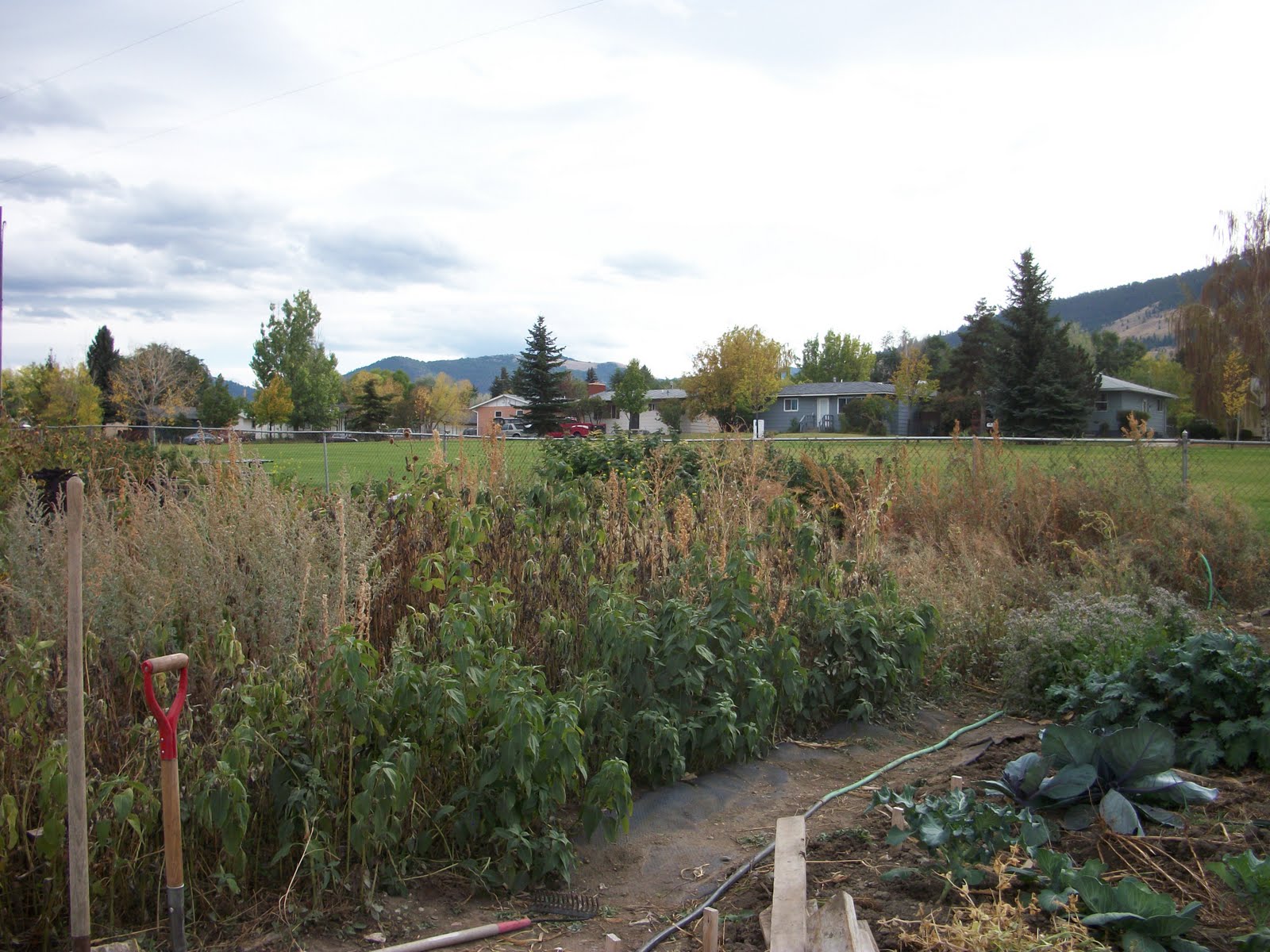
I've started on a plot at a community garden this fall, so the plot will be ready next spring. Luckily, there were some vacancies this year so I could start int he fall--normally you buy the plot in February and you are stuck with what you get. Since the plot I took was empty, we get free time to plan things out.

Pics are below of our progress so far: keyhole beds, tearing out the Jerusalem artichokes that had taken over, and spreading out leaves and local sheep manure to rot over the winter.

And what's news without a good resource? The American Community Garden Association has lots of info, including how to find gardens close to you.


I've been meaning to pick up Growing a City Garden by Jeremy N. Smith & others. Has anyone read it? I must petition the local library!

Saturday, October 1, 2011

Love Soup for Fall Kitchens

I love the book Love Soup: 160 All-New Vegetarian Recipes by Anna Thomas (of The Vegetarian Epicure fame--which, by the way, I was shocked to find is out of print and I feel lucky to still own a rather tattered copy). I grew up with The Vegetarian Epicure in the kitchen and inherited it from my mother--although my vegetarian-phobic grandmother's name is oddly on the inside cover. I wonder if she ever used it?

This new book (it came out in 2009) was a really great surprise. Anna Thomas explains in the section on fall and winter soups that she feels like this is a great time of year for soup--and I wholeheartedly agree. One of her main reasons is that the late-summer harvest is still in high gear, but the cooler weather puts us all in the mood for a warm bowl. Since we've been getting cool nights here in central Montana, I completely agree. We have potato leek soup (made from local farmer's market leeks and potatoes) on the stove right now. Actually, I should admit that it is not one of Love Soup's recipes I have going. But I have plans to make more soup tomorrow to take for lunch the rest of the week. Possible contenders for tomorrow's "lunch soup" include Roasted Golden Beet Soup, Green Soup with Mushrooms, or Green Soup with Ginger, all choices from the book.